Winter mornings, monsoon evenings, or just a household that showers on a schedule — a geyser has quietly become one of the most-used appliances in Indian homes. Yet most people only think about buying one when the old unit stops working, which usually means a rushed decision made under a cold shower.
This guide is meant to slow that decision down. Whether you live in a compact city apartment or a large multi-storey home, here’s what actually separates a good geyser from a mediocre one, and how to shortlist the Top Geyser options for your specific household.
Why the “Best” Geyser Depends on Your Home, Not the Market
There’s no single best geyser — only the best geyser for your usage pattern. A bachelor apartment with one bathroom has very different hot water needs than a joint family home with three bathrooms and a kitchen tap that also needs warm water in winter. Before comparing brands or wattage numbers, it helps to think through three things:
Read More: What a New Roof Should Cost in 2026: A Homeowner’s Budgeting Guide
- Household size and peak usage. If four or five people shower within the same one-hour window every morning, you need either a larger storage tank or a high-capacity instant heater that can recover quickly between uses.
- Climate of your city. Homes in Delhi, Shimla, or parts of the Northeast deal with genuinely cold winters and benefit from higher-wattage storage heaters. Homes in Chennai or Mumbai may only need a geyser for a few months a year, which changes the capacity and even the type you should buy.
- Water quality. Hard water is common across large parts of India, and it accelerates scaling inside the tank. A geyser with a rust-resistant tank and anti-scaling technology will simply last longer in these regions, even if it costs a bit more upfront.
Capacity: The Number Everyone Gets Wrong
A common mistake is buying a geyser based on price alone and ending up with a tank too small for the household. As a rough rule of thumb for storage geysers:
- 1–2 people, one bathroom: 6–10 litres is usually enough
- 3–4 people, one bathroom: 15–25 litres
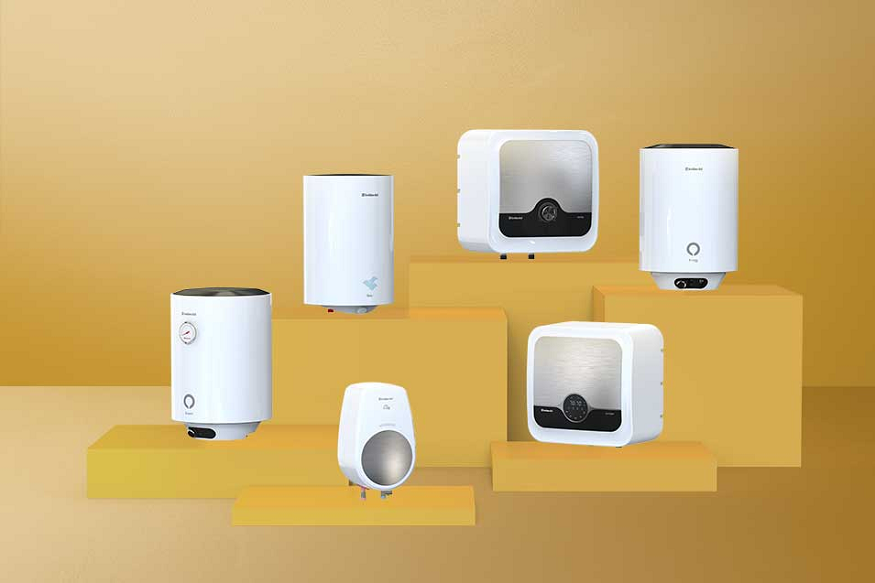
- Joint families or multiple bathrooms: 25 litres or a multi-point setup, or consider instant heaters at each point instead
Instant water heaters, on the other hand, are sized by their power rating (kW) rather than litres, since they heat water on demand rather than storing it. A 3kW instant heater is generally fine for a wash basin or kitchen tap, but showers usually need something closer to 4.5–6kW for a comfortable flow rate.
Safety Features Worth Insisting On
Because a geyser is a pressurised appliance that mixes electricity and water, safety features aren’t optional extras — they’re the baseline you should check before anything else:
- A thermal cut-out that shuts off heating if the water gets dangerously hot
- A multi-function safety valve (usually 3-in-1 or 4-in-1) that manages pressure, prevents backflow, and vents excess steam
- IPX4 or better water resistance rating, especially important if the geyser is mounted in a wet area
- A tank material — such as glass-lined or titanium-coated steel — that resists corrosion over years of use
Energy Efficiency Actually Matters Here
Geysers are one of the highest electricity-consuming appliances in an Indian home, right alongside air conditioners. A BEE star rating of 4 or 5 stars can make a real difference in your monthly bill, especially if hot water usage is heavy. Look also for insulation quality (PUF insulation is common and effective) since it determines how much heat is lost — and how much your geyser has to work to reheat water — between uses.
Storage vs Instant: A Quick Decision Framework
If you’re still undecided between the two broad categories:
- Choose storage if you need hot water at multiple points simultaneously, live in a colder climate, or have a larger household
- Choose instant if you have limited installation space, need hot water quickly without waiting for a tank to heat, or only need it at one or two points
Many households now use a mix — a storage geyser for the main bathroom and a small instant heater near the kitchen sink — which is often more energy-efficient than running one large unit for occasional small needs.
Read More: Window Replacement Cost in Colorado (2026 Guide)
Final Checklist Before You Buy
Before finalising your purchase, run through this quick list: confirm the capacity matches your household size, check the BEE star rating, verify the safety certifications (ISI marking is a good baseline), look at warranty terms (both on the tank and the heating element, since these sometimes differ), and if possible, check installation requirements — some models need specific plumbing or electrical points that aren’t always obvious from the product listing.
A geyser is a five-to-ten-year purchase in most homes, so the extra ten minutes spent comparing specifications is almost always worth it compared to living with the wrong-sized unit — or worse, an unsafe one — for years.