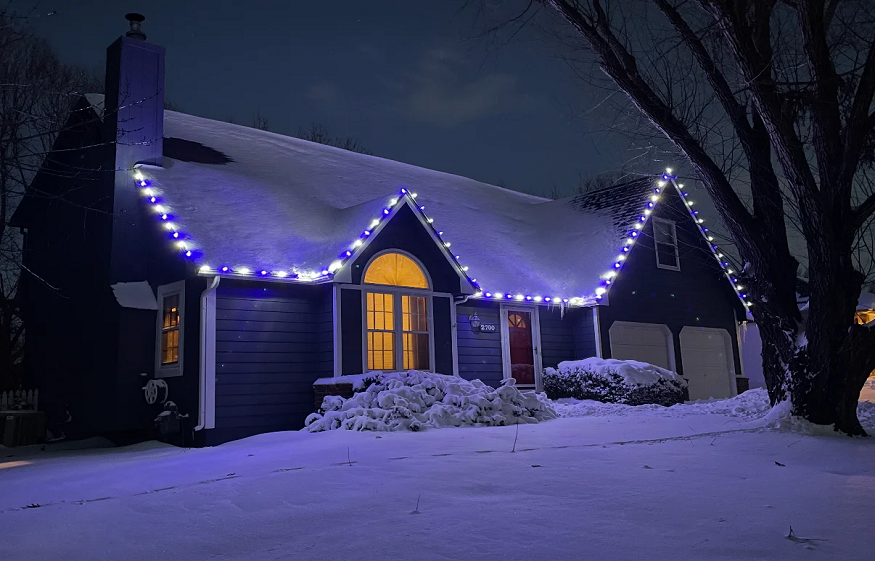
For years, the routine was the same. Every November, homeowners would dig the tangled string lights out of the garage, drag the ladder around the house, and spend a weekend stapling, clipping, and cursing their way along the roofline. Then in January, they’d do it all over again in reverse — usually in worse weather. It’s one of those traditions nobody actually enjoys, but everyone accepts as the cost of having a festive home.
That tradition is quietly disappearing. Permanent outdoor lighting systems — sometimes called “trim lights” or “eave lights” — are now installed once and controlled year-round from an app. Companies like First Response Lights install discreet RGBW LED tracks under the eaves that essentially vanish during the day and turn your home into whatever you want it to be at night: warm white for everyday curb appeal, red and green for Christmas, orange and purple for Halloween, red, white and blue for the Fourth of July, or your team’s colors on game day. The ladder stays in the garage for good.
If you’ve been on the fence about whether permanent lighting is worth it, here’s an honest look at what these systems actually do, what they cost, and what to think about before you commit.
How permanent outdoor lighting actually works
A permanent lighting system is a low-voltage LED track installed along the rooflines, soffits, or eaves of your home. The individual LED nodes are spaced a few inches apart inside a slim aluminum channel, which gets tucked up under the trim so it’s barely visible from the ground during daytime. The whole system is hardwired to a small controller, which connects to your home Wi-Fi.
From there, you control everything from your phone. Most systems offer millions of colors, dozens of preset scenes, and the ability to schedule lights to turn on at sunset and off at a set time. Some homeowners use them mainly for ambient warm-white accent lighting and only switch to color a few times a year. Others change the look weekly. There’s no wrong way to use them.
Read More: 3 Common AC Problems Every Homeowner Shouldn’t Ignore
The case for going permanent
The most obvious benefit is convenience. No more renting lifts, no more falling off ladders, no more replacing strands that one squirrel chewed through. But there are a few less obvious wins worth pointing out.
Year-round curb appeal. Even when you’re not running a holiday scene, warm-white mode functions as architectural accent lighting. It highlights your roofline the same way uplighting highlights a tree — and it makes your home look intentional and finished after dark.
Security. A well-lit exterior is one of the cheapest deterrents against opportunistic break-ins. Having your eaves softly illuminated every night, on a schedule, beats motion-activated floods that startle the neighbors at 2 a.m.
Resale value. Buyers notice exterior lighting. It signals that the home has been cared for and that there’s one less thing they’ll need to add themselves.
No more storage. Those tangled bins of Christmas lights in the garage? Gone. So is the seasonal trip to the store to replace the strand that quit working.
What to think about before installing
Permanent lighting isn’t a small purchase, so it’s worth going in with realistic expectations.
Cost. Most professional installations land somewhere between $2,500 and $6,000 depending on the size of the home, the linear footage of trim being lit, and the brand. Larger or more complex homes can run higher. It’s a real investment — but spread across the years you’d otherwise pay someone to hang Christmas lights, the math often works out faster than people expect.
Brand matters. Not all systems are created equal. A few well-known names in the space include Jellyfish Lighting, Trimlight, and Govee, and they vary in build quality, app reliability, warranty length, and how visible the channel looks during the day. Ask any installer to show you photos of their finished work in daylight, not just glamour shots at night.
Installer matters even more. Clean installs hide the channel under the drip edge so it nearly disappears. Sloppy ones leave the track sticking out like a sore thumb. Look for installers who specialize in permanent lighting (not general electricians who do it on the side), check reviews, and ask whether they handle warranty service in-house.
HOA rules. If you’re in a neighborhood with an HOA, check the guidelines before signing a contract. Most HOAs are fine with permanent lighting because the system is invisible during the day and the colored modes are usually limited to holidays, but it’s worth confirming up front.
Read More: How to Choose the Right Water Cooler For Your Office?
The bottom line
Permanent outdoor lighting is one of those upgrades that sounds like a luxury until you have it — and then you wonder how you put up with the alternative for so long. It pays you back in saved weekends, in safer evenings, in better-looking nights, and in never having to untangle a strand of lights again.
If your last Thanksgiving weekend was spent on a ladder, it might be time to look into installing a system before next holiday season rolls around.